← Field journal · The dream
The farm we're dreaming into being
Power of Grass
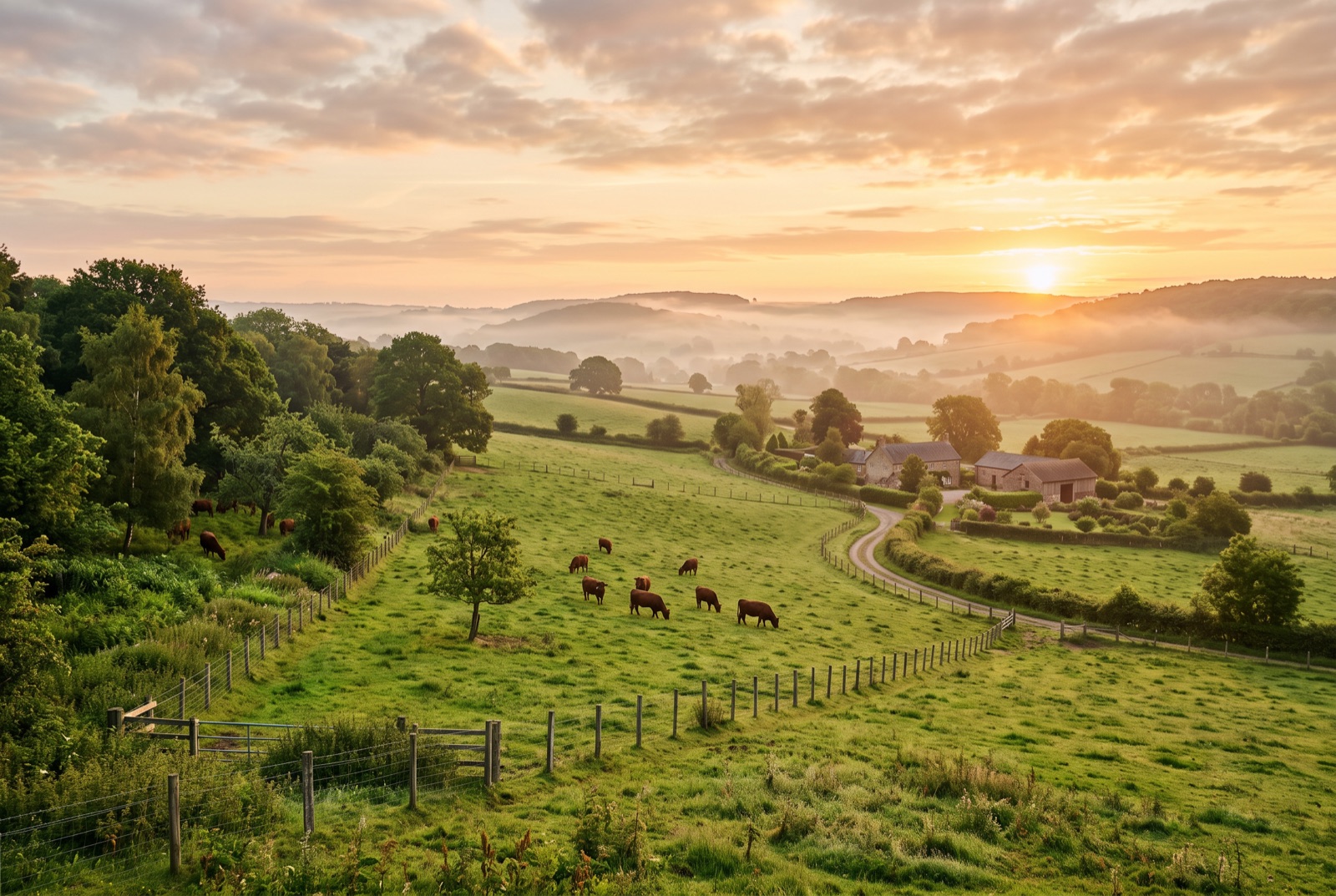
Right now, Power of Grass is a name, a thesis, and a set of beliefs written down before the fences go up. We're telling you that honestly, because the whole point is to document this from the beginning — the thinking, the plan, the mistakes and all. Here's the dream, out loud.
Start with one paddock
Every regenerative farm you've ever admired started small — one piece of ground, one small herd, one season of paying close attention. That's where we begin: a first paddock, a starter herd of South Poll, and the discipline of moving animals well and letting the land rest. Not a sprawling operation on day one. A proof, done right, that we can build on.
Let the animals and the woods do the work
The plan isn't to muscle the land into shape with machines and inputs. It's to let a grazing system and a thinned, opened woodland do what they do — cattle and poultry cycling nutrients across the pasture, and forestry work letting light back onto a dormant native seed bank. Grasses and forbs return, wildlife and insects follow, wildfire risk drops, the wood harvest gets used, and food plots go in. One living system, feeding itself.
Turn the cash crops back into pasture
Here's the loop that makes no sense: thousands of acres of corn and beans, tilled, seeded, sprayed, fertilized, harvested, and trucked — grown for the sole purpose of hauling feed to cattle standing in a lot. All that cost and diesel and chemistry to deliver a meal an animal could have walked out and harvested itself. Convert that same acreage to well-managed pasture and the math flips: the animal cuts its own feed, spreads its own fertilizer, and leaves the ground more alive than it found it.
A pasture is perennial. It regenerates after the herd passes through — no tilling, no replanting, no betting the season on a commodity price every spring. The ground you can't graze, you cut for hay to carry the animals through the cold months. And when an animal finally eats what it was built to eat, a whole layer of the current system just falls away — far less of the illness, medication, and hormones a grain-fed, feedlot animal needs simply to keep standing. Cheaper to run, better for the land, and better for whoever eats what comes off it. Converting cropland back to grass is one of the biggest things we want to prove.
Fund it honestly
Land and animals and time cost money, and we'd rather earn that than ask for it. That's what Big Grass Guy is — our first product, an AI lawn-care app, built to be genuinely useful and to fund the farm the honest way. It's the same idea at backyard scale: score the living thing, and give people a reason to grow it well. Every download is a brick in the barn.
Make it a model — then maybe a movement
If the practice works here, on our soil and in our winters, the next job is to make it copyable. Numbers, methods, honest results — enough that the next grazier down the road doesn't have to guess. And somewhere out past that, the bigger dream: that "Power of Grass" could one day mean not just our farm, but a partnership others can join — a shared standard for land done right.
Good practice first, always
We're not interested in picking a side. A neglected, weed-choked lot and a chemically perfect field with no life in the soil beneath it are the same failure wearing different disguises. The living, tended middle is the whole point — and it doesn't belong to the left or the right. It belongs to whoever's willing to do the work.
That's the dream. Come watch us try to build it.