Carbon capture doesn't need your money or your permission.

It needs grass, roots, and animals — the oldest technology on Earth, already running for free. The climate story got hijacked for profit and control. We're building a farm around what actually works: living soil, open forests, clean water, and food that heals.
Follow the journey Read the vision

The idea

The most powerful land-healing technology on Earth has been growing under our feet the whole time.

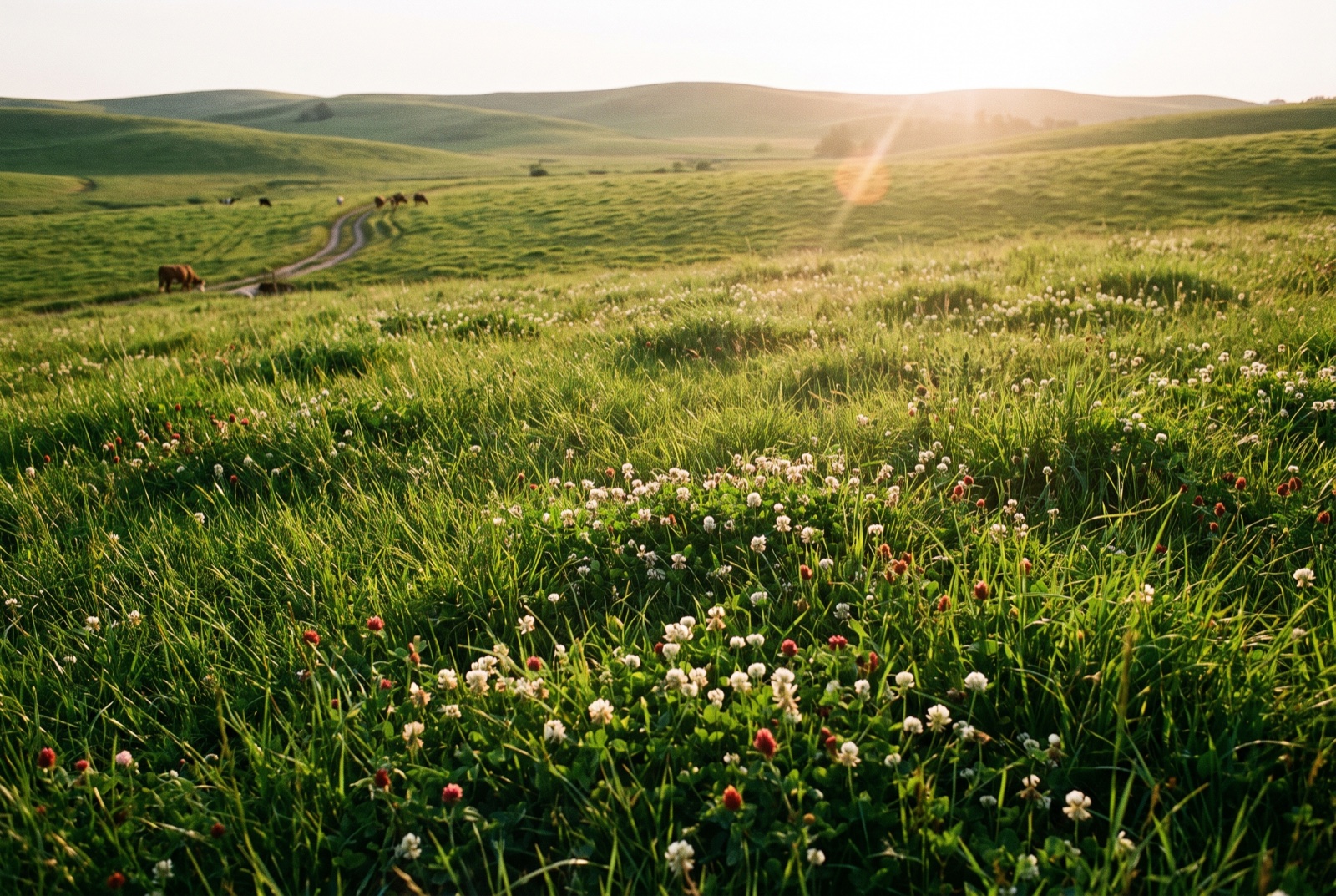
Grass photosynthesizes sunlight into sugar, pumps it down through its roots, and feeds it to the living world underground. That builds soil. Soil that's alive soaks up rain instead of shedding it, holds water through drought, and breathes moisture back into the sky as the clouds and weather downwind depend on. Add a ruminant — a cow built to ferment grass we can't digest — and that same blade of grass becomes food dense with the nutrition our depleted soils stopped giving us. The fastest, cheapest carbon capture we have isn't a machine. It's a pasture done right.

None of that requires sacrifice, regulation, or anyone's permission. It requires better practice. So that's what we're building — and documenting, honestly, from the very beginning.

Not political — physical

The real problems were never left or right.

The world is divided in every possible way, and tribalism blocks the good ideas that would help everyone. Two things can be true at once. These four problems are physical, not partisan — and every one of them has a practice that fixes it.

01

Depleted soils

Decades of tillage and synthetic inputs have burned through organic matter, leaving dirt that can't hold water, feed a plant, or grow anything nutrient-dense.

02

Choked-out forests

Closed, overgrown canopies starve the native seed bank of light. Nothing grows on the floor, wildlife thins out, and the whole stand becomes wildfire fuel.

03

Silted-out waterways

When land can't absorb rain, it sends soil, sediment, and nutrients straight to the creek — clouding water, smothering habitat, and worsening floods.

04

Chemical & fertilizer runoff

Blanket-sprayed herbicide and synthetic fertilizer over thousands of acres isn't farming — it's lazy substitution for building a living, self-feeding soil.

Good practice first. A neglected, weed-choked lot and a chemically perfect lawn with no life in the soil beneath it are the same failure wearing different disguises.

The Power of Grass

Our approach

Four practices. One living system.

Everything on the farm feeds something else. Animals feed the soil, the soil feeds the water, the water feeds the weather, and the whole system feeds us.

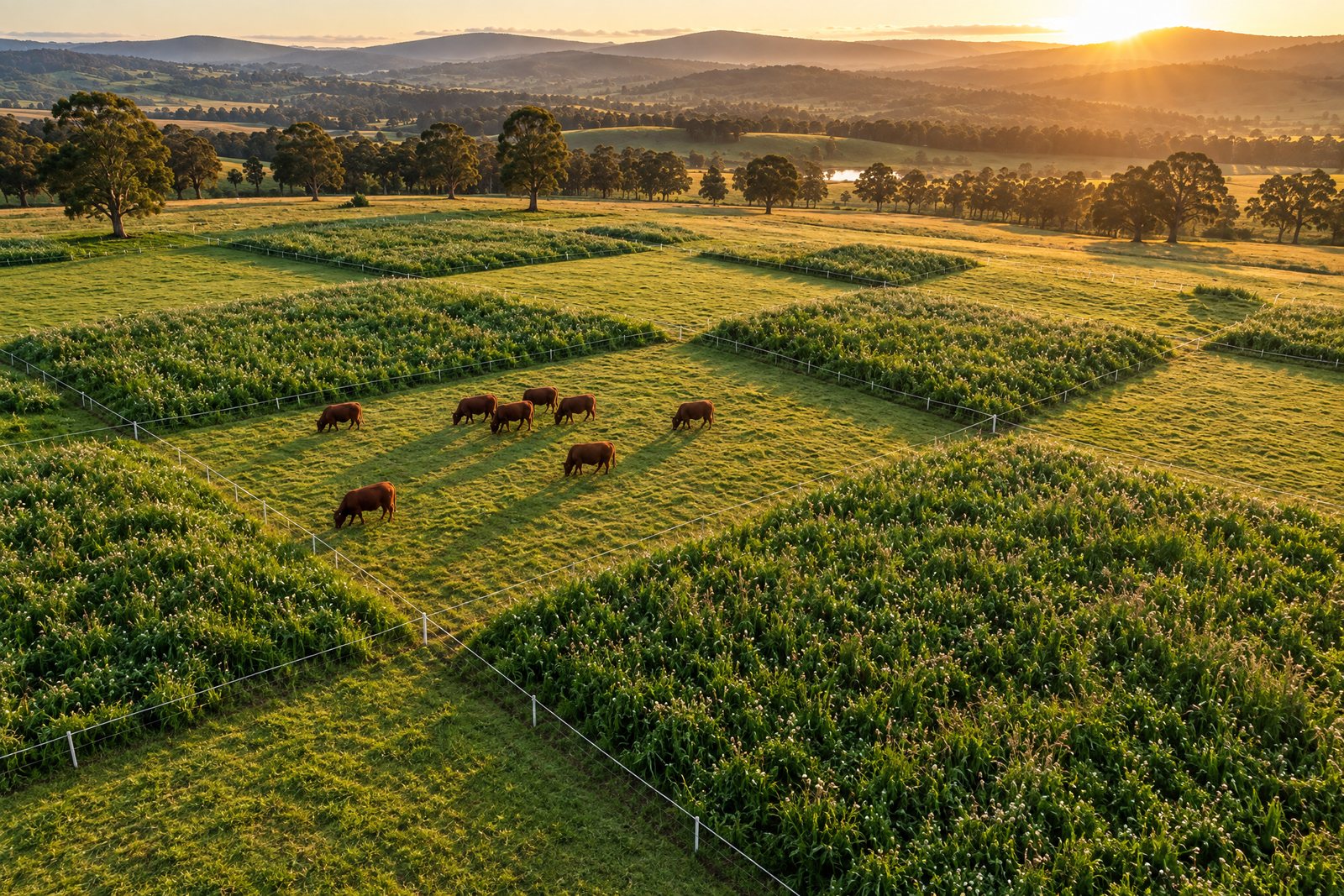
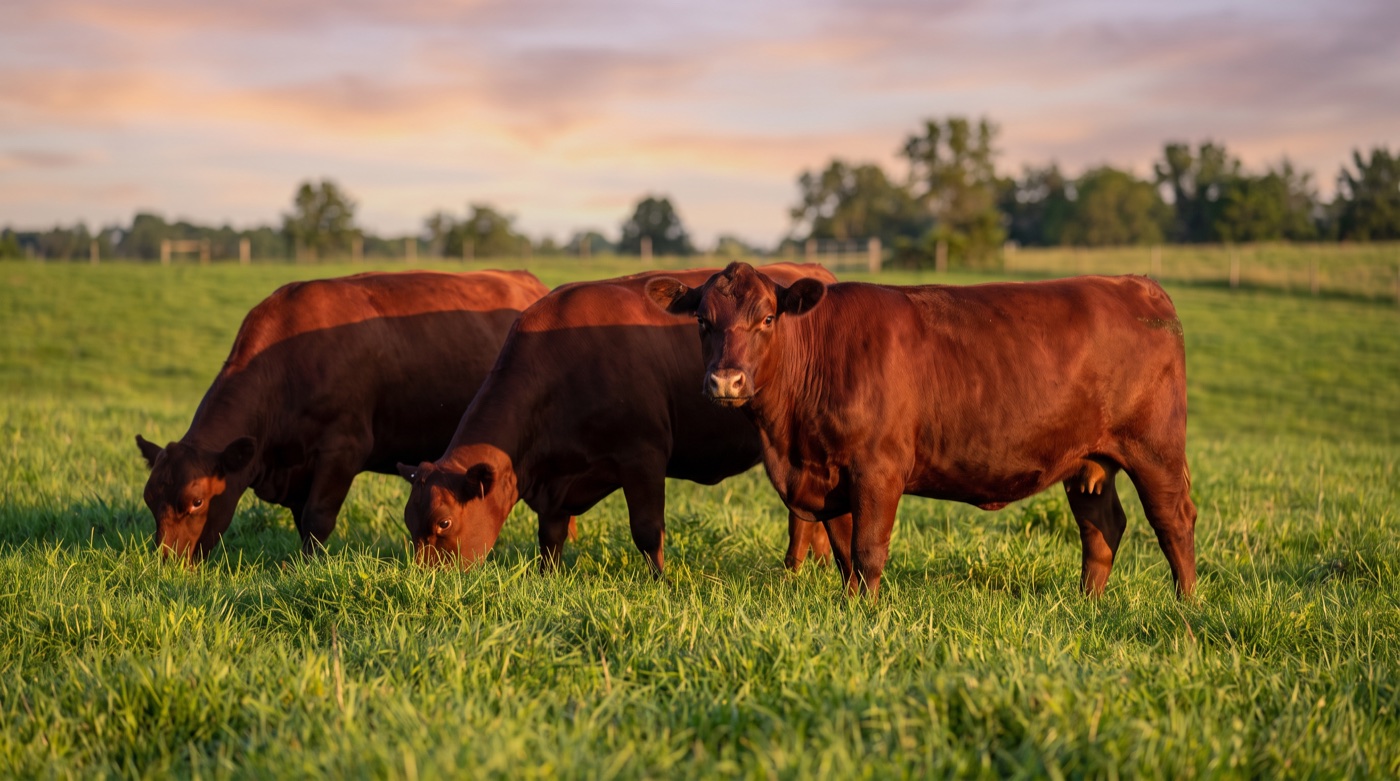
Deep-red South Poll cattle grazing lush pasture at golden hour

Animals that heal the land

Rotational grazing with South Poll cattle and pastured poultry. A smaller, calmer, cold-hardy breed means safer daily handling and — because carrying capacity is measured in pounds, not head — more animals on the same ground without the soil damage the big breeds cause.

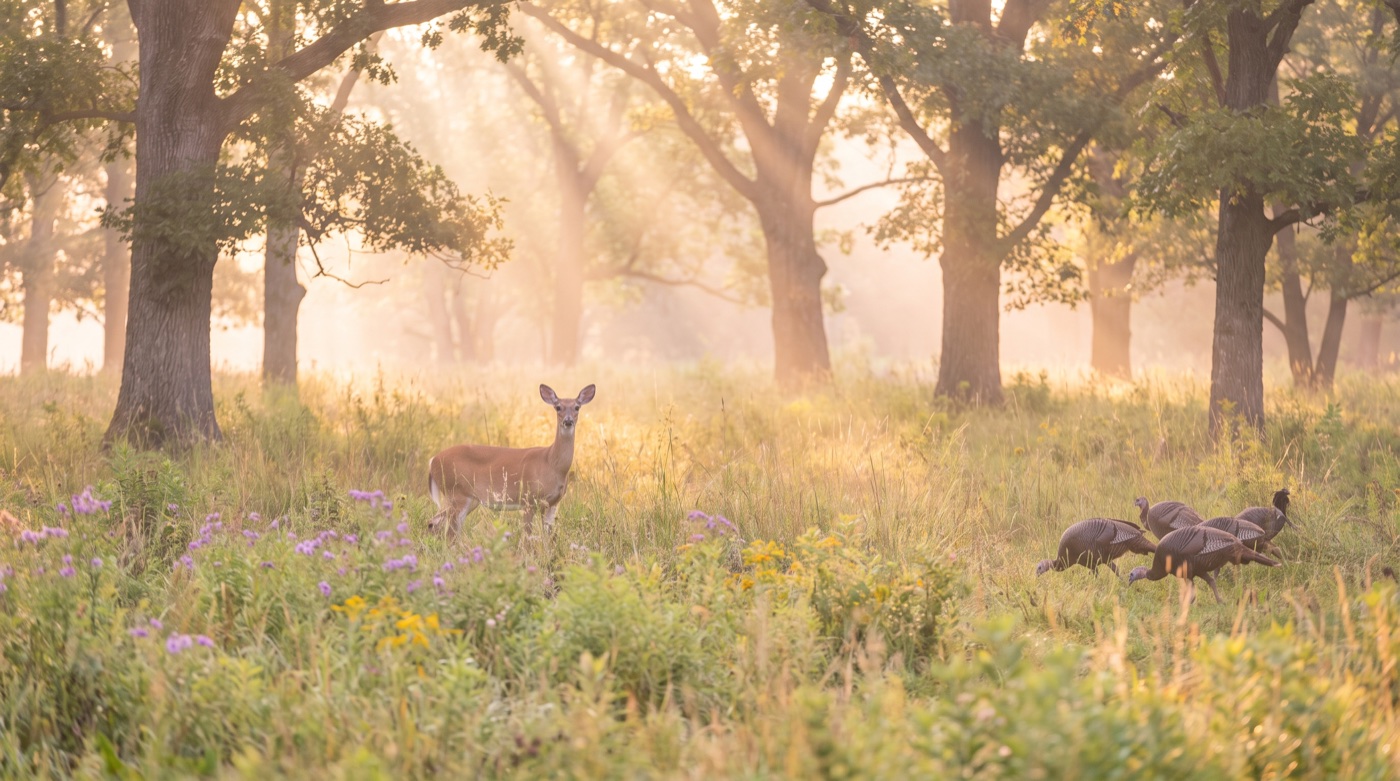
Sunlight reaching the floor of a thinned silvopasture woodland with a whitetail deer and wild turkeys

Waking up the woods

Timber stand improvement and forestry mulching to open the canopy and let light reach a dormant native seed bank. Back come the grasses, forbs, wildlife, and insects — with wildfire risk down, food plots in, and the wood harvest put to use.

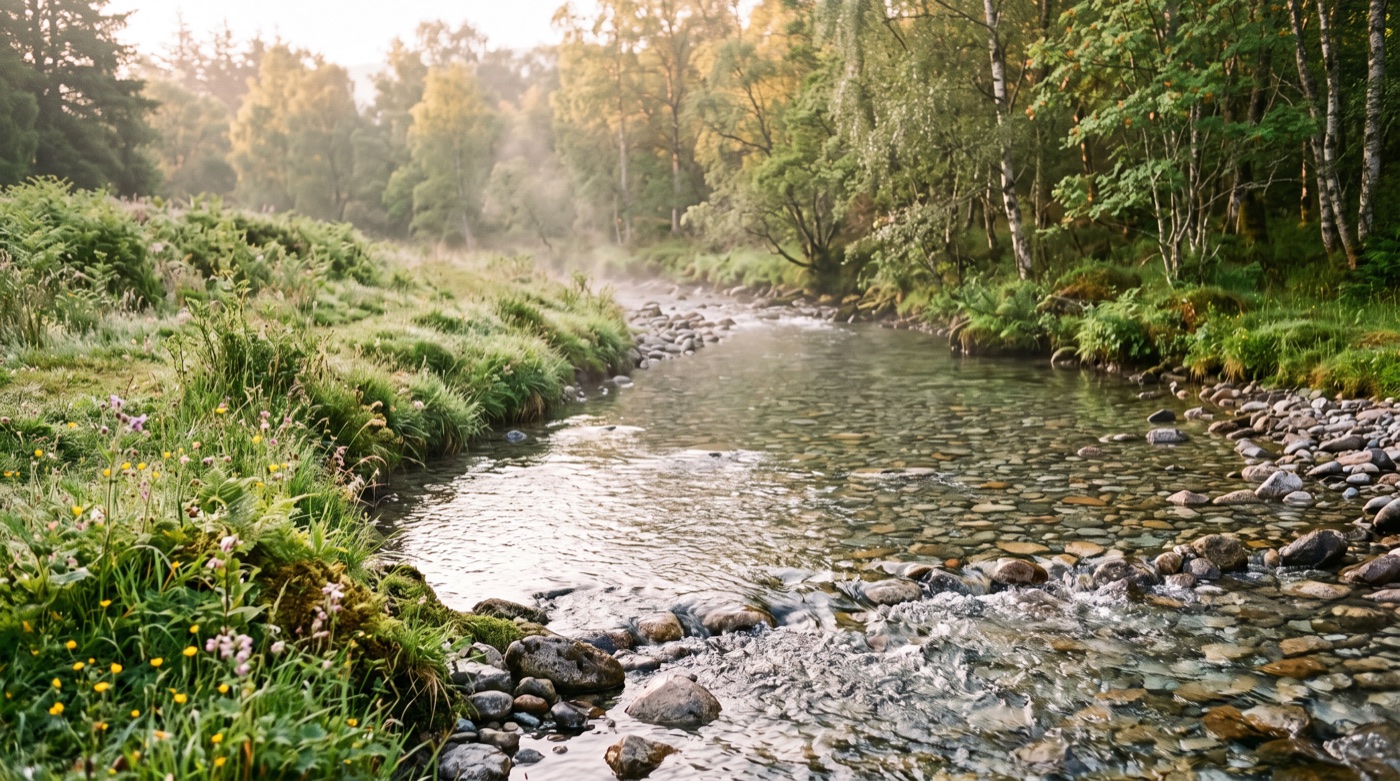
A clear rocky stream running clean over stones through a grassy bank

Water & weather

Living soil is a sponge. It soaks rain in instead of shedding it — building drought reserves, blunting spring floods, cleaning what reaches the watershed, and breathing moisture back up to make the clouds and weather downwind.

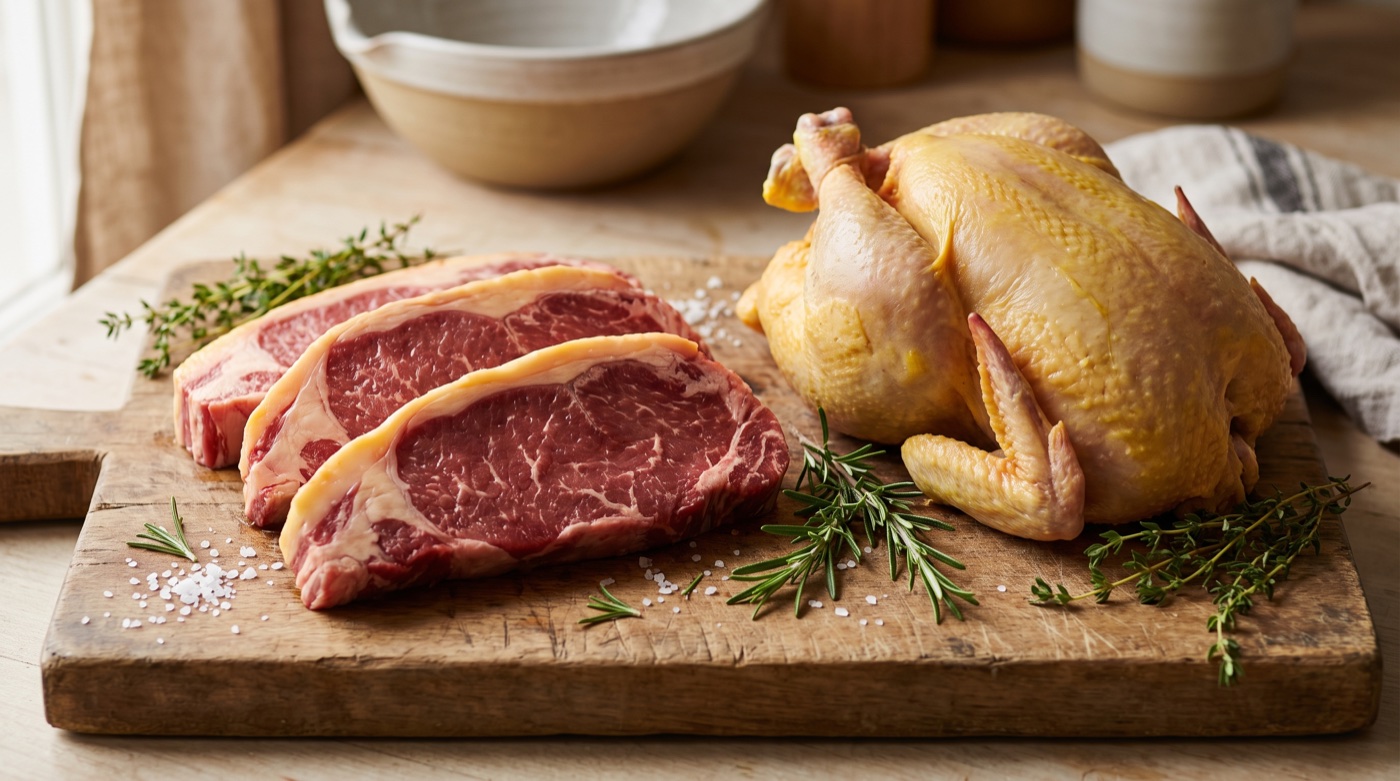
Grass-fed beef with yellow-tinged fat and a pastured chicken on a wooden board

Food as medicine

Grass-fed and finished. A ruminant's gut ferments and unlocks nutrition from grass that our own stomachs never could — turning a well-grown pasture into food that helps close the deficits depleted soil left in our diets.

Why we're different

Make soil the most valuable thing on the property.

Plenty of people farm regeneratively. Our thesis is what we lead with — and one idea we think changes everything.

Environment first

Not production first

Most operations optimize for yield. We optimize for water, soil, wildlife, and nutrition — and find the yield follows.

The right tool, rarely

Practice over dogma

A herbicide can be a fine spot treatment on a real problem. Blanket-spraying it across thousands of acres is lazy. Default to a crimped cereal-rye cover crop instead, and build the soil back.

The score that matters

Organic matter = equity

When soil organic-matter percentage counts toward what land is worth, lazy farming ends overnight. Turn soil health into a number, and watch practice shift from lazy to good — fast.

Big Grass Guy, the AI lawn-care app in the grass

How we're funding this

A regenerative farm starts with an app.

Land, animals, and time cost money. So instead of asking anyone to fund a dream, we're earning it — building genuinely useful tools first. Big Grass Guy puts an AI lawn expert in your pocket: diagnose problems from a photo, score your lawn's health, and get an eco-first plan timed to your weather.

It's the same idea as the farm, at backyard scale — score the living thing, and give people a reason to grow it well. Every download is a brick in the barn.

Meet Big Grass Guy

Field journal

Beliefs, dreams, and the plan out loud.

We're documenting this from the beginning — the thinking before the fences go up. Start here.

Browse the full field journal →

Follow the journey

Watch a farm grow from the ground up.

No spam, no sides, no selling. Just the honest build — the practices, the wins, the mistakes, and the science underneath it. Get the field journal in your inbox.

No spam, no selling, unsubscribe anytime. In the meantime, meet Big Grass Guy.