← Field journal · The herd
Mosaic grazing
Power of Grass · September 2026
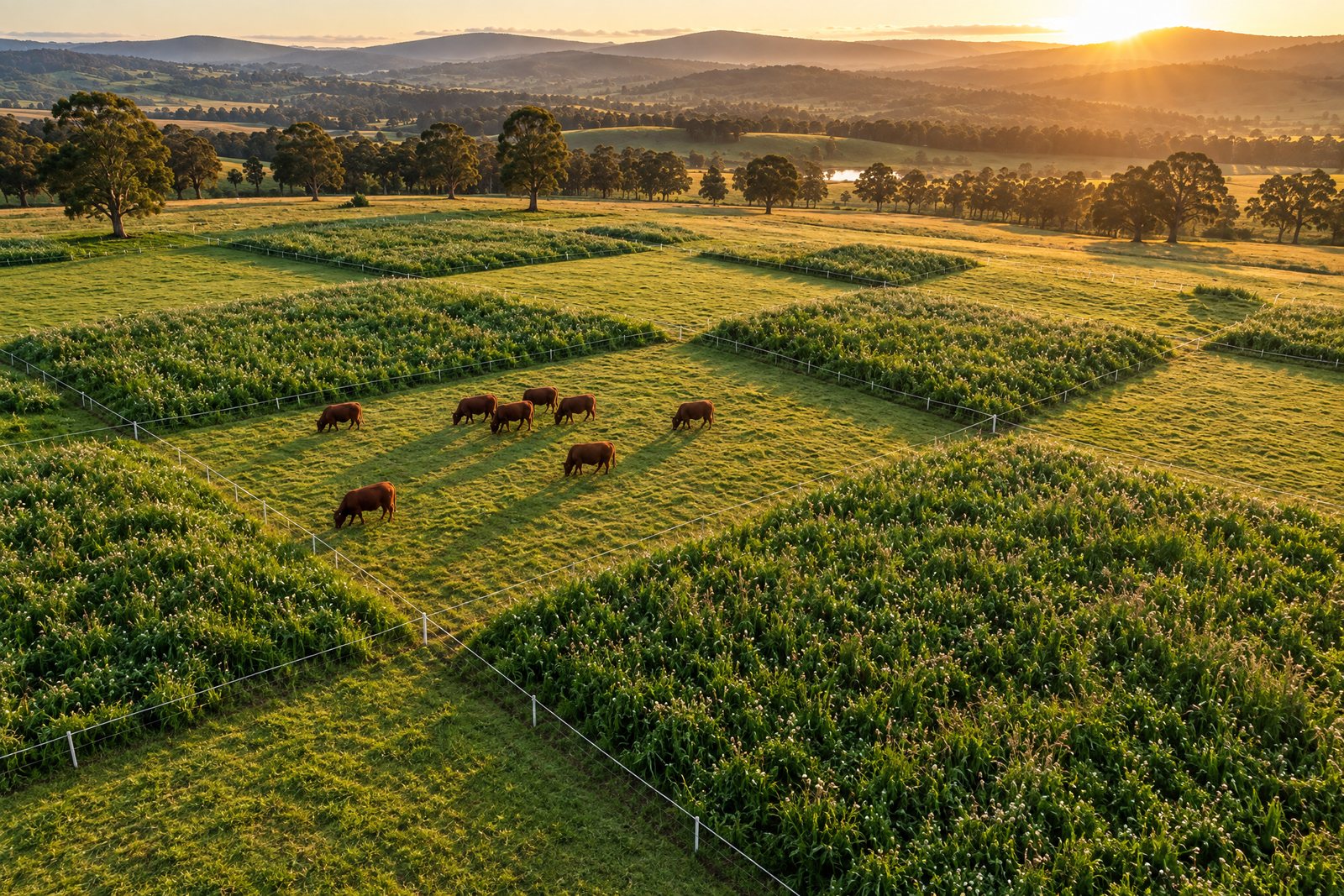
Look down on most pastures from above and you'll see one of two things: a field grazed flat, edge to edge, or a neat row of paddocks eaten one after the other like pages in a book. Both treat grass as a single crop to be used up.
Mosaic grazing looks different. From the air it's a patchwork: a block grazed short here, a block of tall, untouched grass beside it, another grazed block beyond that. The herd never moves into the paddock next door. It skips one and moves on. What's left behind isn't wasted ground. It's the most important part of the plan.
What it is
The idea is simple. You graze a section, then move the animals to a new section that doesn't border the one they just left. Between them sits a strip or block of pasture that stays ungrazed. Over a season, the grazed and rested patches shift around the farm, so every piece of ground takes its turn being grazed hard and then left alone to recover.
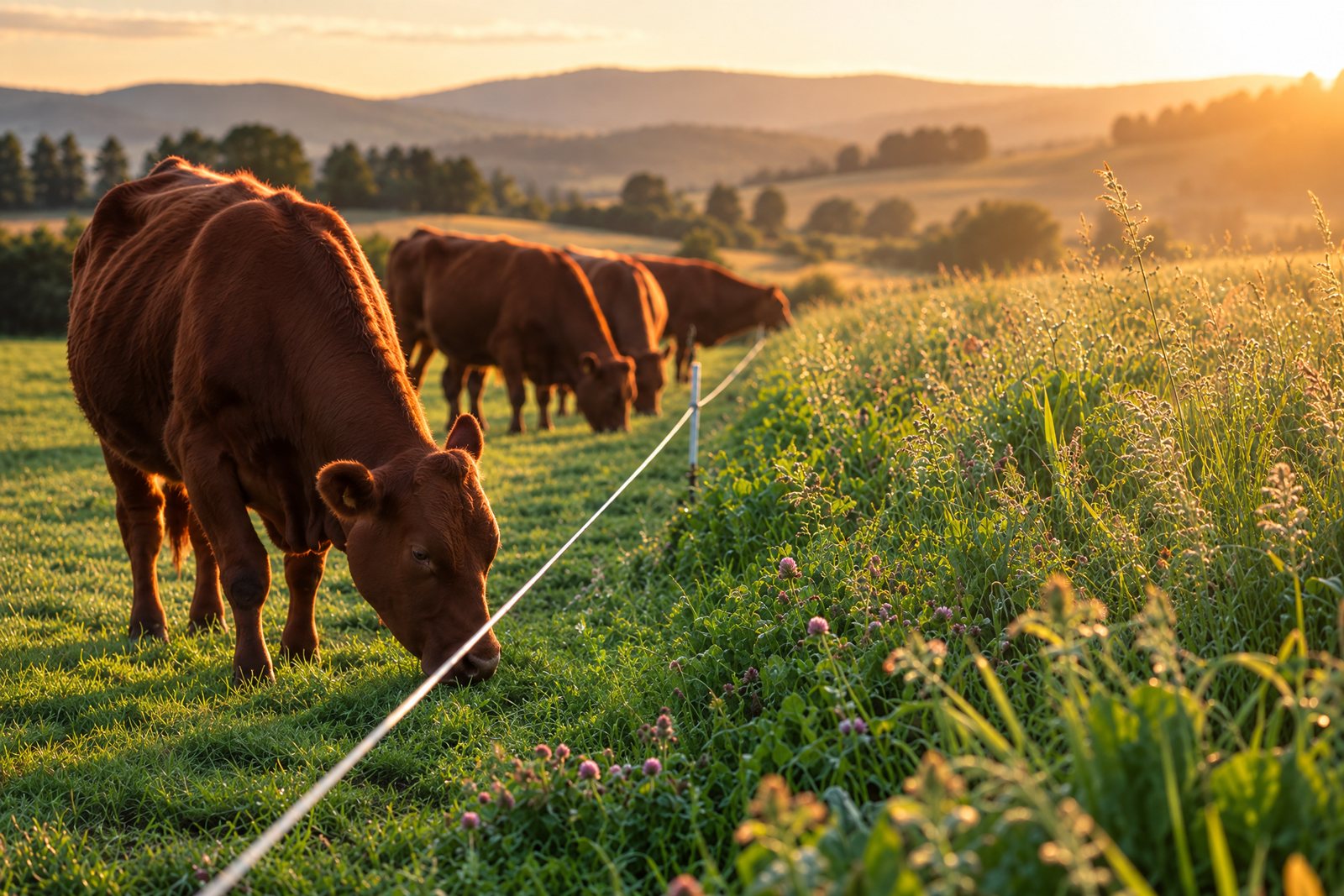
Graze a patch, skip a patch. The tall grass beside the herd is resting, rooting, and waiting its turn.
You're still rotating, and the herd still moves often. The difference is that there's always distance and rest built in between where they were and where they're going.
Keep the herd away from its own waste
The oldest rule in animal health is the one industrial farming breaks every day: never make an animal eat where it defecates. Wild herds never did. They grazed, moved on, and didn't come back until the ground had rested and the manure had broken down.
Mosaic grazing puts that rule into the fence plan. When the herd moves, it doesn't walk into grass that's been sitting next to the dung it just left. There's a buffer of clean, ungrazed pasture between them and their own waste every time.
Break the parasite cycle
This is where the gap earns its keep. Most internal parasite larvae, like the stomach worms that hit cattle, sheep, and goats, live low in the pasture. They hatch out of dung pats and crawl only a few inches up the grass blades, and they cluster close to where the manure landed. An animal grazing short grass right beside old dung is eating them by the mouthful.
Move the herd across a rested strip to fresh, tall grass and two things happen. The animals graze the top of the plant, well above where most larvae sit. And by the time they rotate back to the old ground, the rest period has given much of that parasite population time to die off in the sun and weather without a host.
Flies work the same way. Horn flies and face flies lay their eggs in fresh manure, and the next generation hatches right where the herd is standing. Keep the herd moving away from yesterday's pats and the flies hatch into an empty field.
Less medicine because there's less sickness
Lower worm loads and lower fly pressure mean fewer dewormers, fewer fly treatments, and less of the constant medicating that confinement systems rely on. That's not because the animals are tougher. It's because the system stopped creating the problem. When you keep excrement away from food, you don't have to medicate around the sickness that mixing them causes. Good grazing is preventive medicine you build into the ground.
Rested ground builds the pasture you'll graze later
The ungrazed patches aren't idle. They're where next season's pasture gets built.
Grass that's left to grow tall pushes roots deep. A plant's root system roughly mirrors what's above ground, so a plant grazed to the dirt keeps shallow roots and a plant allowed to grow tall sends them down. Those deep roots do work no machine can. They open channels through compacted ground, pull water and minerals up from below, and feed the soil biology with sugars the whole time they're growing. Over time, tall rested grass relieves compaction naturally, one root at a time.
A good rule of thumb when the herd does come through: take half, leave half. Graze the top half of the plant and leave the bottom half with enough leaf to regrow fast. Come back too soon, before it's recovered, and you draw down the root reserves you just spent a season building.
Mowing: the tool that keeps rest from going wrong
There's one way resting grass can backfire. Leave a patch too long and it goes stemmy, coarse, and low in feed value. Weeds get a head start in any gap you leave open.
That's the job for maintenance mowing. A well-timed cut on a rested patch knocks back weeds before they set seed, lets the grasses and legumes outcompete them, and resets tough, overgrown growth into fresh, leafy regrowth. The clippings go straight back to the soil as mulch. Mowing isn't a replacement for grazing. It keeps the rested ground in shape until the herd comes back to it.
Room to fix the ground, with no animals in the way
Rested sections are also your window for heavier soil work. If a patch needs subsoiling to break up a compacted layer, you can run the subsoiler through ungrazed ground with no animals in it, so there's no worry about fresh rip lines, soft ground, or stock stepping into a furrow and getting hurt. (We covered how and why to subsoil on contour in Building soil from rock.) Do the work, let it settle and green back up, then bring the herd in when the ground is ready for them.
A grass bank for drought and winter
Every tall, ungrazed patch is standing feed. That makes the mosaic your insurance policy.
When a dry spell stalls regrowth, you aren't out of grass. You've got reserves standing in the field instead of paying for hay trucked in at drought prices. And in colder climates, those same patches carry you through the months when nothing grows. Grass stockpiled in late summer and fall holds its value surprisingly well into winter. You can graze it off through light snow, or cut the extra for hay if the season gives you more than you need. Either way, the grass you didn't graze in July is feeding the herd in January.
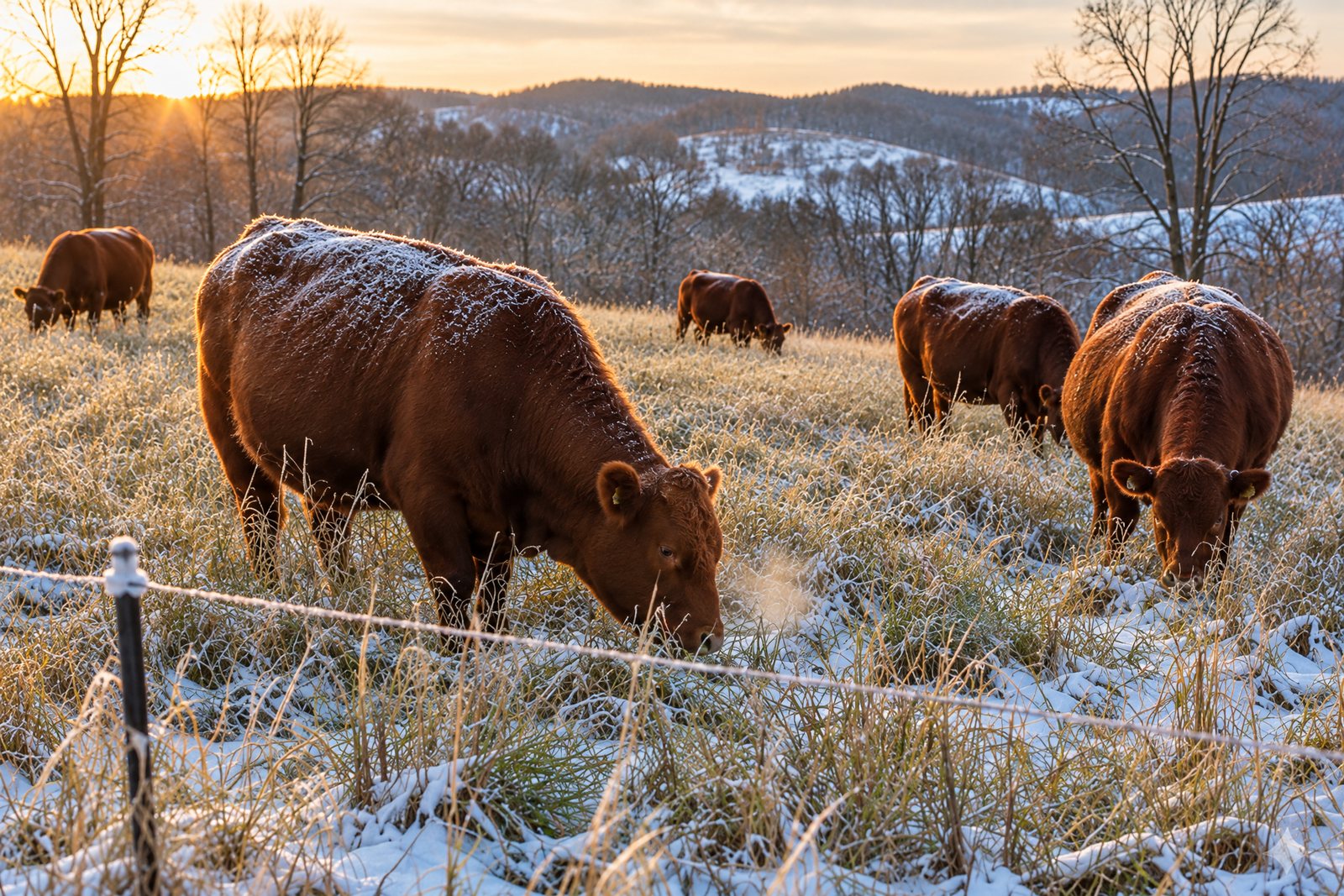
Stockpiled grass: the patches left standing in summer become winter feed, grazed right where they grew.
Room for everything else that lives there
A pasture grazed flat edge to edge is a desert for wildlife. A mosaic is the opposite. Those tall patches are cover and nesting ground.
Grassland birds like the bobolink and eastern meadowlark nest right on the ground in tall grass, and their numbers have dropped hard as hayfields get cut earlier and pastures get grazed uniformly. Leave a few patches untouched from late spring into mid-summer and you give them somewhere to raise a brood. Let the rested patches flower and you feed pollinators too. The tall grass also houses the beneficial insects that hunt pests, and the dung beetles that bury manure and turn it into soil.
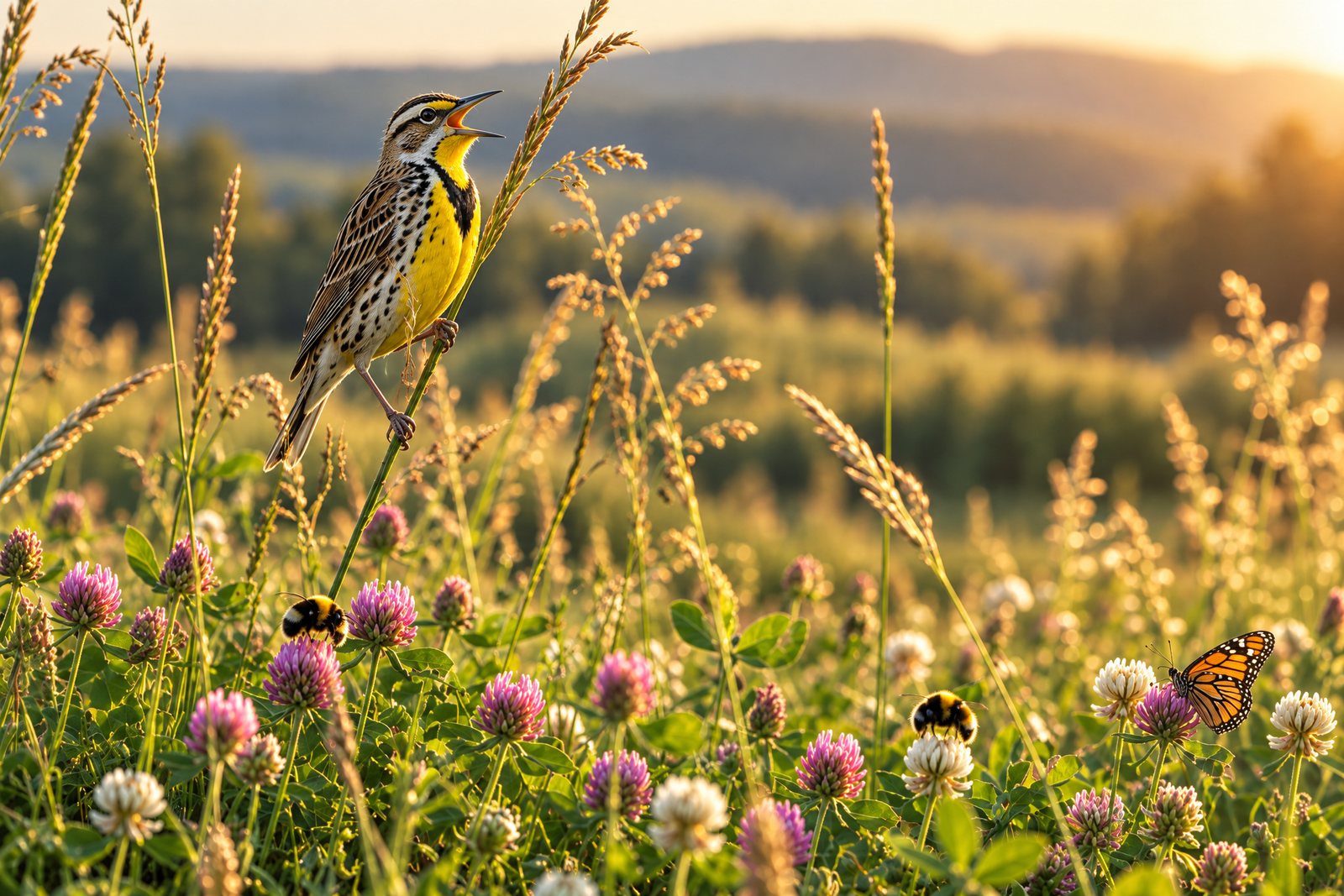
Rested ground is habitat: cover for nesting birds, flowers for pollinators, a home for the insects that work for you.
Water goes in, not away
Tall grass and a thick layer of litter shade the soil and keep it cool. When rain hits, it's slowed by the leaf, caught by the litter, and soaks down the channels those deep roots opened. It doesn't sheet off bare, grazed-flat dirt. Every rested patch is a sponge holding water on the land, and more water in the ground means faster regrowth the next time the herd comes through.
The honest part
None of this is free. Mosaic grazing means more moves, more portable fence, and more thought about where the water is and how the herd gets to it without crossing the ground you're resting. It takes a plan, and it takes watching the grass instead of the calendar.
It also isn't a set-and-forget system. Rest too little and the benefits disappear. Rest too long without mowing and you lose feed value to rank growth. The skill is in the timing, and that comes from walking the pasture and paying attention.
But the payoff is a pasture that works on every front at once: a cleaner, healthier herd, deeper soil, stored feed, more wildlife, and fewer bills for medicine and hay.
Leave the gap
The biggest shift in mosaic grazing is seeing the ungrazed ground differently. It isn't unused grass. It's pasture being built, a herd being protected, feed being banked, and a home for everything else that makes the land work. Graze a patch, skip a patch, and let the gap do its job.