← Field journal · The woods
Let the light back in
Power of Grass · August 2026
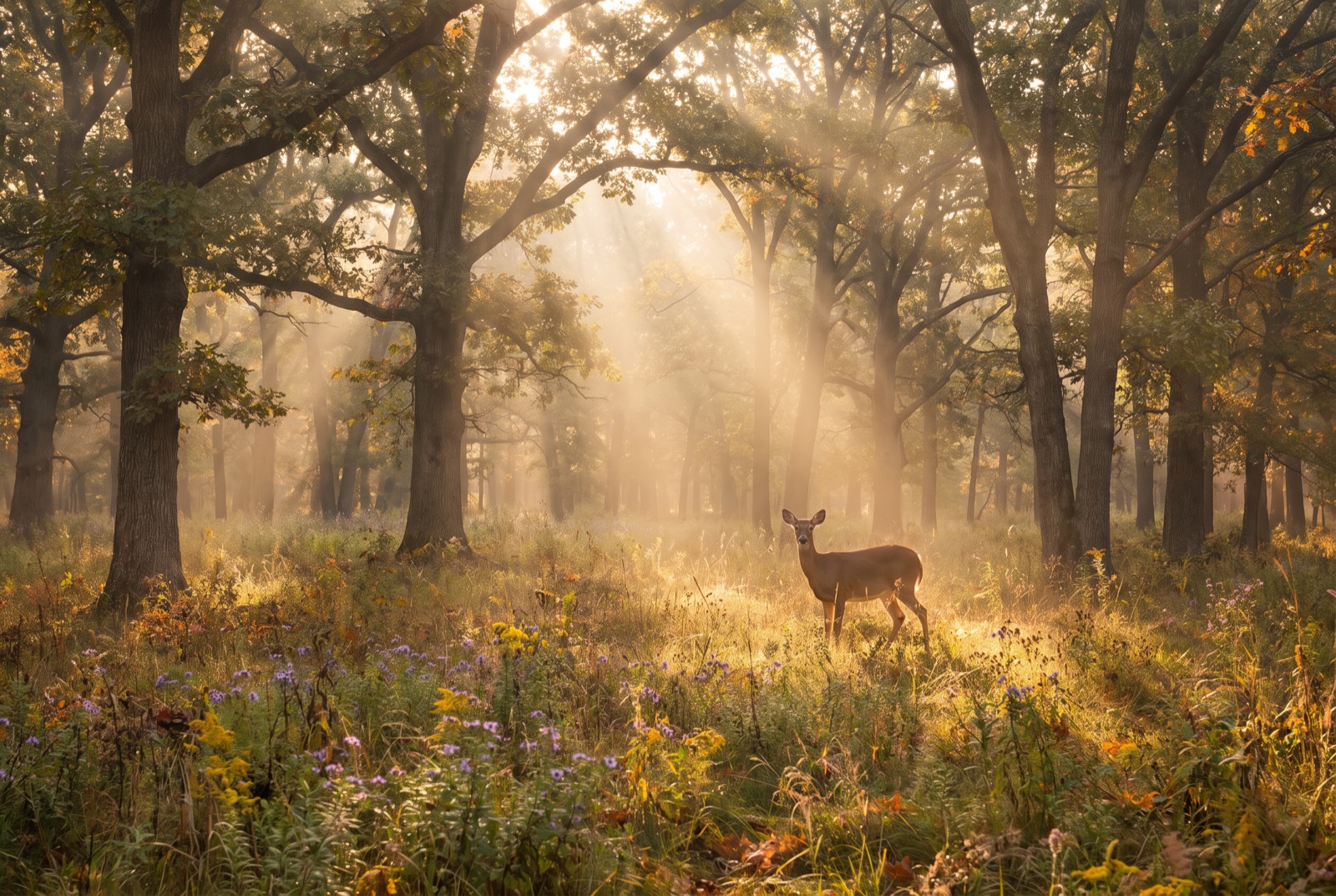
There's a picture in our heads of a healthy forest: a dense, dim wall of trees packed shoulder to shoulder, untouched by human hands. Leave nature alone, the thinking goes, and that's what you get. It looks impressive. It looks pristine.
It's usually neither.
A great many of the woods we call "untouched" are actually overcrowded, stressed, and ecologically hollow — closer to an overgrown thicket than a thriving forest. And "untouched" is a myth to begin with. For thousands of years these lands were shaped by fire, by grazing and browsing herds, by constant disturbance that kept them open and varied. Take that away, and a forest doesn't settle into some pristine balance. It chokes itself.
As with everything we do here, there are two ways to get it wrong. One is to strip a woodlot for the money in it. The other is to abandon it completely and call the overgrowth "nature." The healthy middle — a tended, open, diverse woodland — is the goal. It just takes the same thing a good pasture takes: attention, and a willingness to let the light back in.
What a crowded stand does to the ground
Pack too many stems onto an acre and they spend their lives competing — for light, water, and root room. You get tall, spindly, stressed trees stretching for the sun, none of them thriving. Down below, the floor goes dark. And a dark floor is a dead floor: the native seed bank — decades of dormant grass, wildflower, and forb seed waiting in the soil — can't germinate without sunlight, so it just sits there. Leaf litter piles up faster than it breaks down, because decomposition needs light, warmth, and biology a cold, shaded floor doesn't have. Rain gets caught in the canopy or sheds off the packed duff instead of soaking in.
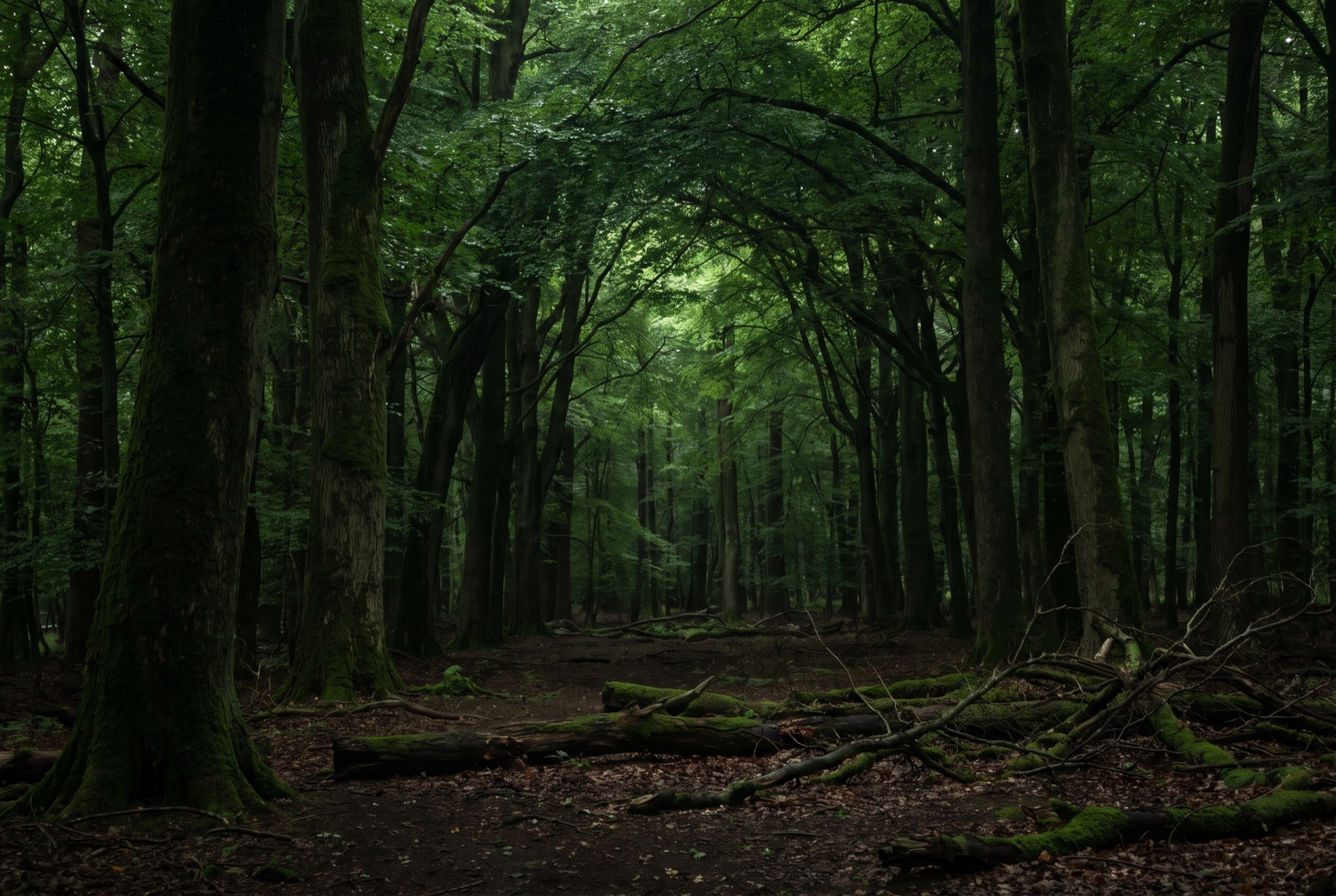
The forest we're taught to admire — impressive overhead, and all but empty where animals actually feed.
The result is the opposite of what people assume: under a choked, "impressive" stand, the soil quietly degrades. Same story as any overworked field — it's just wearing a canopy.
Open it up, and the ground comes alive
Now let sunlight reach the floor. The seed bank wakes up. Grasses and forbs that were waiting in the dark come back, and with them a whole living ground layer. That layer does the heavy lifting: continuous cover and deep grass-and-forb roots build stable organic matter — the kind of carbon that stays locked in the soil. More living green means more transpiration, more moisture moving back into the air and the water cycle. Rain lands on a spongy, organic floor and soaks straight in. Litter finally decomposes into soil instead of stacking up as dry fuel.
None of this means fewer trees is automatically better — it means the right trees, with room to breathe, over a floor that's alive. An open woodland holds its carbon in a far more stable, resilient place than a crowded one that's a single dry season from giving it all back.
The fire question
An overcrowded stand is a fire waiting to happen — packed stems, ladder fuels running from the floor to the crown, deadfall rubble everywhere. When it lights, it doesn't stay on the ground. It climbs into the canopy, races, and takes everything with it — soil biology, seed bank, and any infrastructure in its path.
Open that same stand — space the trees, clear the ladder fuels and rubble, get water and organic matter back into a spongy floor — and any fire that does come behaves completely differently. It stays low and cool, cycles nutrients, and does more good than harm. Same acreage, a fraction of the danger, and real protection for the barn, the house, and the fence line.
Prescribed fire is a legitimate tool, and where a landowner can genuinely use it, it's a good one. But in a lot of places it comes wrapped in permits, agencies, and oversight — a level of government involvement on your own ground that many people can't get, and plenty more would rather not invite in. So this isn't a case for the torch. It's a case for doing the same work mechanically, on your own schedule, with tools you control.
How to do it right — and how not to
The tool for all of this is thinning — foresters call the whole practice Timber Stand Improvement. There's a right way and a lazy, damaging way, and the difference is everything.
The damaging way is called high-grading: cut the biggest, best, most valuable trees and leave the small, sick, and crooked ones to grow into next year's money. It looks profitable. It's actually soil-mining with a chainsaw — every cycle strips the best genetics and leaves the stand weaker, poorer, and more crowded with junk.
Good practice is close to the opposite:
- Take out the losers, not the winners. Remove the suppressed, spindly, stressed trees stretching for light, the diseased, and the dead-wood ladder fuels.
- Keep the strong ones and give them room. Leave the big, healthy, well-formed trees space to grow open crowns with strong horizontal limbs — vigorous trees that throw more mast, shade, and seed.
- Keep variety. A diverse mix of species makes a resilient ecosystem. Managing a woodlot for the single most valuable wood is the same mistake as a monoculture field.
For the ground layer, two mechanical tools do most of the work, and they do different jobs:
- Forestry mulching grinds the choked understory and small stems back to the ground to reset what's there. It knocks the overgrowth down and lets light in fast, but the existing roots stay — so it's the tool for periodically resetting a lower canopy and floor you intend to keep managing.
- Forestry tilling goes further, taking unwanted growth out at the root so something new can take its place. This is the reset for undesirable or invasive stands: remove them down to root level, then re-establish native grasses and wildflowers. It's especially useful on sunny edges, where woodlands grow unnaturally thick with thicket and invasives.
One warning on both: clearing is only half the job. Bare, disturbed ground is exactly what invasives want. Reset, then re-establish the natives you want in their place — or you'll just grow the problem back bigger.
One thing this isn't
An opened, thinned woodland with light on a grassy floor can look a lot like silvopasture — scattered trees over pasture, grazed by livestock. The resemblance is real. The goal here is not. This is forest stewardship: a healthy, diverse woodland managed for the woods themselves and the wildlife that live in them — not trees cleared to manufacture cattle pasture. Forest is forest; pasture is pasture. A dense stand is impressive to look at and empty where it counts: nothing to eat in the lower five feet where animals actually live, and tangled deadfall that helps predators and traps fleeing prey. Open it, and grasses and forbs put food and cover at animal height while an animal can still see danger and run. We tend the woodland because a healthy woodland — full of deer, turkey, songbirds, and pollinators — is worth having on its own. Where forest and pasture ever do meet, that's a separate, deliberate decision, not the point of this work.
The same story, in the trees
Step back and it's the same lesson as everything else we talk about. Light, living roots, water, wildlife, and the right kind of disturbance build soil, resilience, food, and value — whether it's a pasture or a patch of woods. Done well, it pays for itself: the harvest funds the work, the avoided fire loss is real money, and the land gets more productive every year instead of less. It's better for the water, better for the wildlife, and it builds the same organic matter that should count toward what the land is honestly worth.
A woodlot isn't a woodpile to strip, or a thicket to abandon. It's a living system to tend. Good practice doesn't stop at the tree line.